
COURSE DESCRIPTION
Dates
2027: 05.04.2027 – 10.04.2027 | 10.05.2027 – 15.05.2027 | 14.06.2027 – 19.06 2027 | 19.07.2027 – 24.07.2027 | 16.08.2027 – 21.08.2027 | 06.09.2027 – 11.09.2027 | 11.10.2027 – 16.10.2027
2028: To be announced (Ask for dates)
Intro
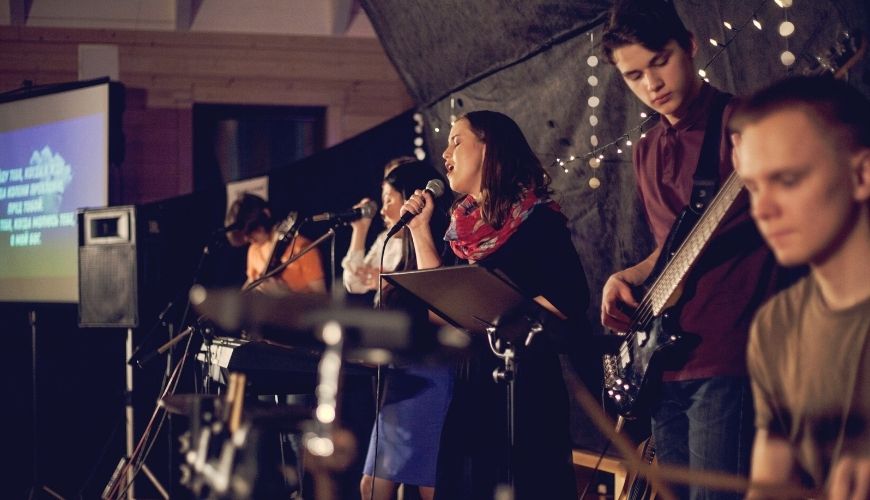
Sound and music are everywhere, waiting to be turned into powerful learning tools. “Youth creativity through musicmaking and sound arts” is an inspiring, practical course that shows you how to bring creative audio projects into any youth activity and subject.
You will explore low-budget ways to make learning multisensory, such as by recording student podcasts, creating foley sound effects, and building rhythmic beats with everyday objects.
Who is this for?
This course is tailored for youth workers, cultural activity creators, and educators of all levels and subjects – including primary, secondary, and higher education teachers, school leaders, etc. – who want to explore the creative power of sound, and incorporate it into their projects and productions.
Participants will benefit from an international learning experience while traveling with Erasmus+.
Objectives
By the end of this course, participants will be able to:
- Guide open improvisation: Use simple graphic scores and flexible frameworks to encourage low-pressure musical expression.
- Build rhythmic and performative confidence: Facilitate body percussion, vocal games, and simple songwriting exercises across different scenarios.
- Master accessible audio tools: Use free web-based apps and basic recording techniques that can elevate any project with your youth group or classroom.
- Create immersive audio stories: Get familiar with recording narration and podcasts, background soundscapes using everyday items, finding and creating sounds, and practice bringing them all together via audio editing.
- Practice audio hunting: Capture environmental noises and use them to build unique soundscapes and musical beats.
Modules
- Module 1: Rhythm, voice, and everyday sounds. Discover how to turn simple items, body percussion, and your own voices into an engaging musical toolkit.
- Module 2: Songwriting and vocal expression. Learn how to guide collaborative lyric writing and vocal games that build confidence without needing formal music theory.
- Module 3: Graphic scores and open improvisation. Replace traditional notation with visual frameworks and graphical scores, allowing everyone to join in collaborative music-making.
- Module 4: Audio hunting and sound sampling. Step outside to record environmental noises with handheld devices, learning how to loop and sample sounds into creative compositions.
- Module 5: Audio stories and podcasting. Structure and record engaging youth podcasts and/or spoken narration, with sound effects and background music.
- Module 6: Soundtracks and Foley arts. Bring video clips to life by recording custom sound effects with everyday objects and scoring simple student film projects.
- Module 7: The music and audio showcase. Finalize a collaborative audio project with European peers and share practical strategies for integrating sound arts into your curriculum.
Course Outcomes
- Build an accessible audio toolkit: Walk away with a collection of zero-to-low-budget recording techniques, graphic scores, and audio lesson plans ready for immediate use.
- Foster multisensory learning: Gain active listening strategies that boost student focus, teamwork, and engagement across any topic and/or curriculum subjects.
- Drive digital transformation: Gain complete confidence in using everyday audio technology, breaking down barriers to support digital innovation in your institution.
- Empower inclusive creative expression: Use open musical frameworks to ensure every student, regardless of musical background, feels heard and included.
- Enhance cross-curricular storytelling: Learn how to blend narration, original sound effects, and music to elevate youth participant presentations and group work.
- Exchange European best practices: Connect with an international network of educators and youth workers, sharing cultural sounds, creative ideas, and building long-lasting cross-border partnerships.
Equipment
Participants will need to bring their laptop (not a tablet) to effectively utilize web-based audio tools and recording applications during the course.
See all available Erasmus+ courses we offer.
Destination:
Corfu is a beautiful green island, which enjoys a mild Mediterranean climate. Corfu is a very popular tourist destination. Up until the early 20th century, it was mainly visited by the European royals and elites. It is still popular with the global elite. The island’s history is laden with battles and conquests. Corfu was long controlled by Venice and repulsed several Turkish sieges, before falling under British rule following the Napoleonic Wars. Corfu was eventually ceded by the British Empire along with the remaining islands of the United States of the Ionian Islands, and unification with modern Greece was concluded in 1864 under the Treaty of London. Corfu is renowned for its long tradition and rich culture which is unlike any other Greek island. In 2007, the city’s old city was designated as a UNESCO World Heritage site. Here you will also discover a compact world of beautiful beaches and stunning mountain peaks, ancient ruins and picturesque villages. There is something for everyone on the island, whether you prefer peace and quiet or a lively cosmopolitan destination.
Pre-book this course! We will get back to you as soon as possible with further details. Reserve your place now!
Course Features
- Lecture 0
- Quiz 0
- Duration 1 week
- Skill level All levels
- Language English
- Students 15
- Assessments Yes