

COURSE DESCRIPTION
Dates
2026: 17.08.2026 – 22.08.2026
2027: 04.05.2027 – 09.05.2027 | 05.07.2027 – 10.07.2027 | 23.08.2027 – 28.08.2027
2028: To be announced (Ask for dates)
Intro
Are you ready to inspire creativity and ignite meaningful discussions in your classroom?
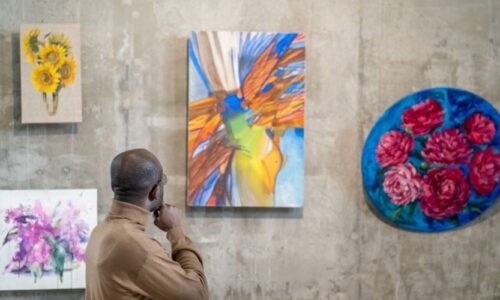
“Critical Thinking Through Art” invites educators to explore the intersection of art and analytical thought.
This course encompasses a diverse range of projects, such as place-based learning in galleries, interdisciplinary art analysis, and collaborative art-making, to help you foster creativity. Discover how to use simple, artistic frameworks to foster critical thinking and cross-cultural empathy.
Who is this for?
This course is tailored for education, cultural and youth professionals of all levels – including teachers, leaders, counselors, mentors, camp leaders, extracurricular activity coordinators, and more – who want to harness the potential of art in education.
No prior art expertise is required. Just curiosity and a willingness to explore creative processes. Participants will benefit from an international learning experience while traveling with Erasmus+.
Objectives
By the end of this course, participants will be able to:
- Understand art observation: Find out about the benefits of using visual art observation to stimulate classroom discussions.
- Develop critical thinking: Explore the role of art in enhancing analytical thought and problem-solving skills.
- Encourage creative innovation: Work on integrating creative processes and innovation into your daily teaching.
- Analyze and interpret: Interpret various artworks to promote deeper comprehension and cross-cultural perspectives.
- Design interdisciplinary projects: Develop practical strategies for merging art with history, science, literature, and other subjects.
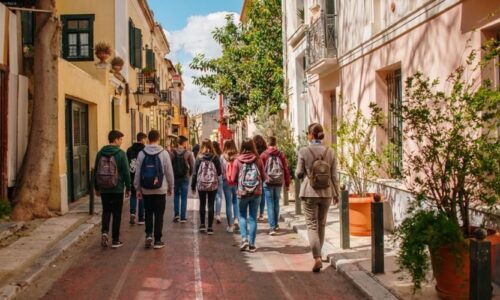
- Facilitate place-based learning: Leverage local museums and galleries as dynamic extensions of your classroom.
Modules
- Module 1: The power of art in education. Explore the value of art in fostering critical thinking and discuss its role across European educational systems.
- Module 2: Art as a catalyst. Analyze artworks to stimulate problem-solving and practice critical thinking routines through a local gallery visit.
- Module 3: Interdisciplinary approaches. Integrate art across various subjects and design collaborative cross-curricular projects.
- Module 4: Appreciation and analysis. Learn techniques for interpreting artworks, facilitating debates, and conducting art-based assessments.
- Module 5: Hands-on art experiences. Engage in art-making activities to promote self-expression and apply artistic processes to analytical thought.
- Module 6: Practical implementation. Develop concrete lesson plans, share best practices with European peers, and build collaborative art-driven initiatives.
Course Outcomes
- Build a practical artistic toolkit: Explore accessible analysis routines and practical activities that can be adapted to different learning contexts.
- Enhance intercultural literacy: Gain the critical tools necessary to guide youth safely and effectively in cross-cultural dialogues and European initiatives.
- Drive creative transformation: Build confidence in using art-based assessments, supporting innovation and well-being within your institution.
- Empower youth/student voices: Shift young people from passive learners into active creators and analytical thinkers by modeling creative expression.
- Promote positive school/organizational culture: Use artistic activities to encourage creativity, critical thinking, empathy, and meaningful participation within the learning community.
- Exchange European best practices: Connect with an international network of educators and youth workers, sharing strategies and building long-lasting cross-border partnerships.
Equipment
No special equipment is required. All necessary materials will be provided during the course.
See all available Erasmus+ courses we offer.
Destination:
Corfu is a beautiful green island, which enjoys a mild Mediterranean climate. Corfu is a very popular tourist destination. Up until the early 20th century, it was mainly visited by the European royals and elites. It is still popular with the global elite. The island’s history is laden with battles and conquests. Corfu was long controlled by Venice and repulsed several Turkish sieges, before falling under British rule following the Napoleonic Wars. Corfu was eventually ceded by the British Empire along with the remaining islands of the United States of the Ionian Islands, and unification with modern Greece was concluded in 1864 under the Treaty of London. Corfu is renowned for its long tradition and rich culture which is unlike any other Greek island. In 2007, the city’s old city was designated as a UNESCO World Heritage site. Here you will also discover a compact world of beautiful beaches and stunning mountain peaks, ancient ruins and picturesque villages. There is something for everyone on the island, whether you prefer peace and quiet or a lively cosmopolitan destination.
Pre-book this course! We will get back to you as soon as possible with further details. Reserve your place now!
Course Features
- Lecture 0
- Quiz 0
- Duration 1 week
- Skill level All levels
- Language English
- Students 15
- Assessments Yes